
How to Stop Static Cling in Your Laundry This Winter
October 09, 2026
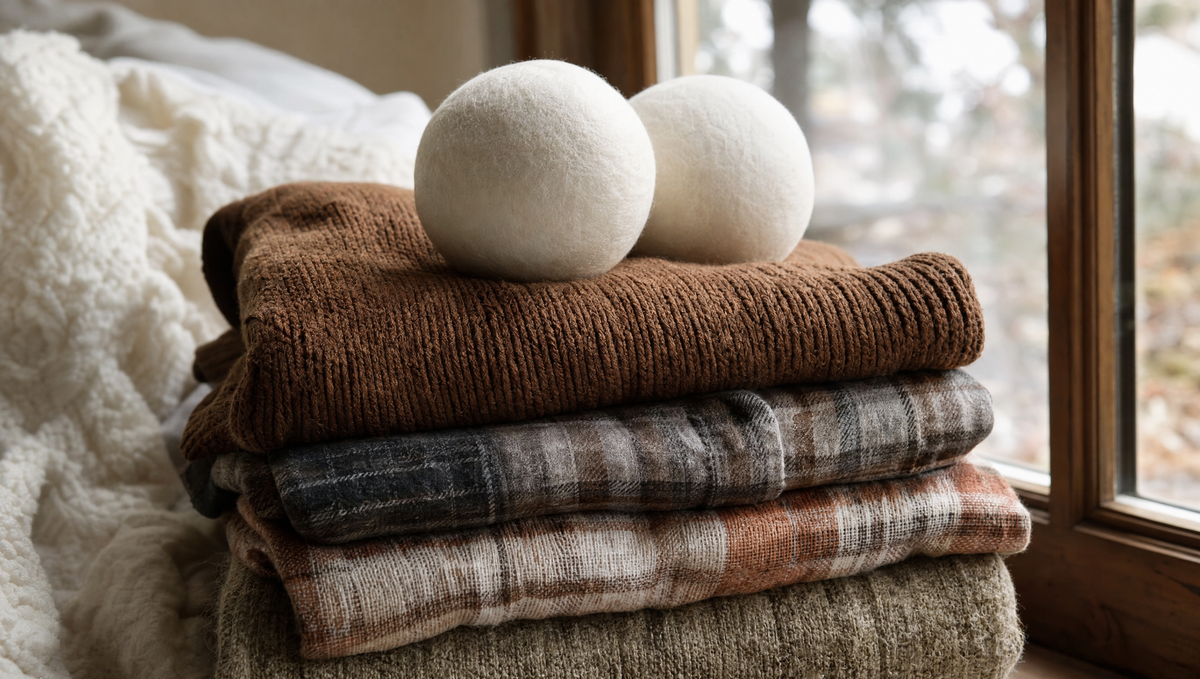
If your laundry starts crackling, clinging, and zapping you every winter, it is not your imagination. Static cling gets dramatically worse in cold weather because cold air holds very little moisture, and dry air gives the electric charge that builds up in your dryer nowhere to go. The good news: you can stop static in your laundry naturally, without a single dryer sheet. The two biggest fixes are adding wool dryer balls to every load and not over-drying your clothes. Here is why winter turns your dryer into a static machine, and the full playbook for shutting it down.
It is friction plus dry winter air.
Clothes rub together in the dryer and build charge, and dry winter air will not let it drain away. Fix it with wool dryer balls and by not over-drying: the balls keep humidity in the drum and cut the friction that starts it all.
Why is static cling worse in the winter?
Static in laundry comes from friction. As clothes tumble, fabrics rub against each other and swap electrons, leaving some garments positively charged and others negatively charged. Opposites attract, so your socks weld themselves to your sweaters and everything snaps when you pull it apart.
In summer, that charge mostly drains away on its own, because humid air carries it off. Winter is a different story. Cold air holds very little water vapor to begin with, and heating it indoors drops the relative humidity even further. With no moisture in the air to bleed the charge away, it just sits in the fabric, waiting for your hand. Your dryer makes it worse by over-drying: once the load is bone dry, there is no moisture left in the clothes themselves, and the last stretch of tumbling is pure charge-building friction. Synthetics like polyester and fleece, which winter wardrobes are full of, are the worst offenders.

How do you get rid of static in laundry naturally?
You do not need chemical-coated sheets. These six fixes attack the two causes, friction and dryness, directly.

How do wool dryer balls stop static?
Wool dryer balls fight static on both fronts at once. First, friction: as they bounce, they physically separate your clothes, so fabric spends less time grinding against other fabric. Less rubbing means less charge in the first place. Second, dryness: wool absorbs moisture from the wet load early in the cycle and releases it back near the end, keeping a touch of humidity in the drum exactly when winter air has none to offer. That humidity gives the charge somewhere to go.
There is a bonus effect, too. Because the balls separate the load and move more hot air through it, they cut drying time by 14 to 25 percent, which means your clothes spend less time in the bone-dry, charge-building phase at the end of the cycle. Use two of the 4 inch balls for a regular load, and four for a massive or bulky one. For the full routine, see our guide on how to use wool dryer balls.


Two big balls of 100 percent organic New Zealand wool. Less friction, more humidity, faster drying: everything winter static hates, with zero chemicals.
Dryer sheets vs wool dryer balls for static
Dryer sheets do suppress static, but look at how they do it before you reach for the box.
| For winter static | Dryer sheets | Wool dryer balls |
|---|---|---|
| How they fight static | Chemical coating on fabric | Less friction, more humidity |
| Residue on clothes | Yes, builds up over time | None |
| Towel absorbency | Reduced by the coating | Kept intact |
| Drying time | No change | 14 to 25 percent faster |
| Sensitive skin | Fragrance and chemicals | Just wool |
| Ongoing cost | Box after box | One purchase, about 1,000 loads |
That residue column matters more than it looks: the same coating that calms static is what makes towels feel waxy and stop absorbing. For the full head-to-head, see wool dryer balls vs dryer sheets.
Big balls, small static
Little dryer balls get buried in a heavy winter load of sweaters and flannel. Our 4 inch balls have the size to keep bulky loads separated all cycle long, which is exactly where winter static starts. Bigger is better.

Pure organic New Zealand wool, densely felted for heavy winter loads. Softer sweaters, zero zap, about 1,000 loads per set.
Frequently asked questions
Why does my laundry have so much static in winter?
Cold air holds very little moisture, and heating it indoors dries it out further. Without humidity, the charge your clothes build by rubbing together in the dryer has nowhere to drain, so it stays in the fabric.
How do I get rid of static in laundry without dryer sheets?
Use wool dryer balls, stop the cycle while clothes are slightly damp, toss in a damp washcloth for the last 15 minutes, and dry synthetics separately. Together these remove most winter static.
Do wool dryer balls help with static?
Yes. They separate clothes to reduce the friction that creates charge, and they release absorbed moisture late in the cycle, which keeps enough humidity in the drum for the charge to drain away.
Why are my clothes full of static right out of the dryer?
They were over-dried. Once everything is bone dry, the last minutes of tumbling are pure charge-building friction. Use sensor dry or pull the load a few minutes early.
What fabrics cause the most static?
Synthetics: polyester, fleece, nylon, and acrylic. They hold charge far more than cotton or wool. Drying them as their own load, or hang-drying them, cuts static across everything else.
Does fabric softener stop static?
It reduces it, but by coating your clothes in a residue that builds up, flattens towels, and can irritate skin. Wool dryer balls manage static mechanically with nothing left behind.
Kill the crackle.
Two Big Wool Balls in every winter load: less friction, more humidity, faster drying, and sweaters that no longer bite back.
Get bigger balls on Amazon →4-inch XXL · 100% organic New Zealand wool · about 1,000 loads